
Emergency Evacuation Plan Template | Fire Escape Map Guide & Safety Symbols
EEM - Emergency Evacuation Map
Emergency Evacuation Plan Template: Complete Guide for Safe Building Evacuation
Emergencies such as fires, gas leaks, earthquakes, or other hazards can happen unexpectedly in any building. Having a clear and professionally designed emergency evacuation plan template is essential to help occupants evacuate safely and quickly.
A well-designed evacuation map provides clear instructions, highlights emergency exits, shows escape routes, and identifies life safety equipment. It ensures that everyone inside the building understands how to respond during an emergency.
At EEM – Emergency Evacuation Map, we specialize in creating professional evacuation maps and fire escape plans for all types of properties, including offices, residential buildings, hospitals, schools, hotels, factories, and commercial facilities.
This guide explains the key elements of an evacuation plan template, including evacuation instructions, emergency contact numbers, safety symbols, and life safety equipment.
What Is an Emergency Evacuation Plan Template?
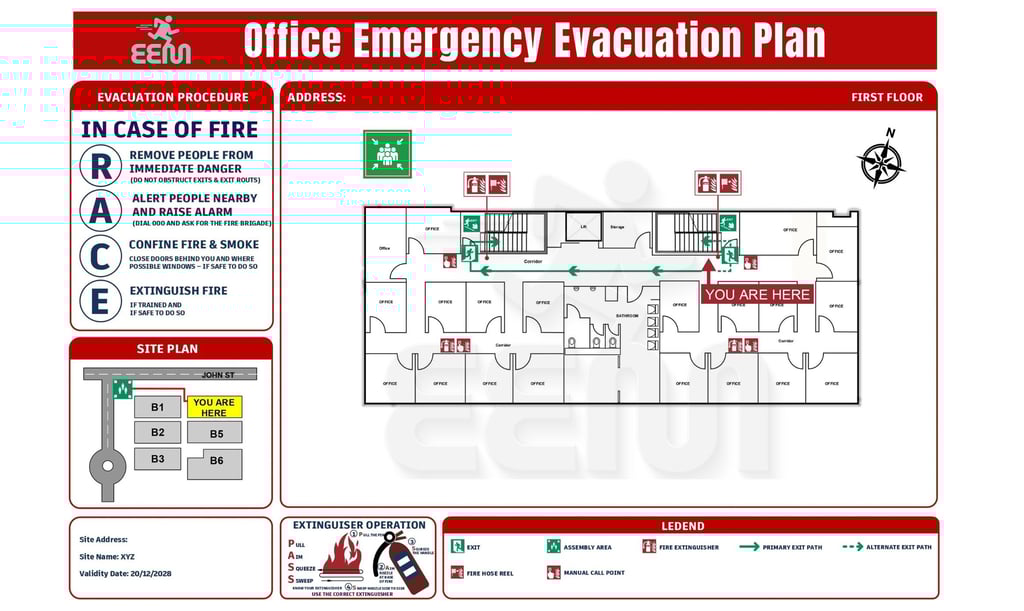
An evacuation plan template is a visual layout used to design a building’s evacuation map. It helps display the safest and fastest routes for occupants to exit the building during emergencies.
A typical evacuation template includes:
Building floor layout
Emergency exit routes
“You Are Here” location marker
Fire safety equipment locations
Emergency assembly points
Evacuation instructions
Emergency contact numbers
Safety symbol legend
These elements help occupants quickly understand where they are and how to safely leave the building during emergencies.
Why Every Building Needs an Evacuation Map
Evacuation maps are a critical part of any building safety system. During emergencies, clear guidance can prevent confusion and panic.
Key benefits of evacuation plans include:
• Helping occupants quickly locate the nearest exit
• Reducing panic during emergency situations
• Identifying fire safety equipment locations
• Improving emergency preparedness
• Supporting workplace and building safety compliance
Whether it is a small office, large commercial building, apartment complex, or industrial facility, having a visible evacuation map significantly improves safety.
Key Components of a Professional Evacuation Plan
A professional evacuation plan should include several important elements to ensure clarity and effectiveness.
1. Building Layout and Escape Routes
The building layout forms the base of the evacuation map. It clearly shows rooms, corridors, stairways, and exit doors.
Evacuation routes are usually marked with green directional arrows that guide occupants toward the nearest safe exit.
These routes help people quickly understand which direction to move during an emergency.
2. “You Are Here” Marker
The “You Are Here” indicator shows the current location of the viewer on the map.
This feature is extremely important because it helps occupants:
Identify their exact location
Understand nearby exits
Follow the closest evacuation route
In large buildings such as hotels, hospitals, shopping centers, and office complexes, this marker makes evacuation maps much easier to understand.
3. Emergency Evacuation Instructions
Evacuation maps often include simple instructions explaining what occupants should do during an emergency.
One commonly used method is the RACE procedure.
R – Rescue
Help people in immediate danger if it is safe to do so.
A – Alarm
Activate the fire alarm and notify emergency services.
C – Contain
Close doors to help prevent the spread of fire and smoke.
E – Evacuate / Extinguish
Evacuate the building safely or use a fire extinguisher if trained.
These instructions provide quick guidance during high-stress emergency situations.
4. Emergency Contact Numbers
Emergency evacuation maps should include important contact numbers that occupants may need during an emergency.
These may include:
Fire department
Ambulance services
Police department
Building security
Facility management
Providing emergency contact numbers ensures that help can be requested immediately if needed.
5. Life Safety Equipment
A good evacuation map also highlights the locations of life safety equipment throughout the building.
Common life safety equipment shown on evacuation maps includes:
Fire extinguishers
Fire alarm call points
Fire hose reels
Fire hydrants
First aid kits
AED (Automated External Defibrillator)
Fire blankets
Emergency exits
Emergency assembly points
Clearly marking these devices helps occupants respond effectively during emergencies.
Safety Symbols and Legend
Evacuation maps use standardized safety symbols so people can quickly recognize emergency equipment.
A symbol legend is included on the evacuation map to explain what each symbol represents.
Common evacuation plan symbols include:
Safety Symbol
Fire Extinguisher: Indicates the location of a fire extinguisher used to control small fires.
Fire Alarm: Manual alarm activation point used to alert occupants in case of fire.
Emergency Exit: Aesignated emergency exit door used to safely evacuate the building.
Assembly Point: Safe gathering location outside the building during an evacuation.
First Aid: Location of a first aid kit for treating minor injuries during emergencies.
AED: Automated External Defibrillator used for treating sudden cardiac arrest.
Fire Hose Reel: Location of a fire hose reel used to control or extinguish fires.
Using internationally recognized safety symbols ensures that people from different backgrounds can understand the evacuation plan.
Where Evacuation Maps Should Be Installed
Evacuation maps should be placed in visible and accessible areas so occupants can easily locate them.
Common installation locations include:
Building entrances
Office corridors
Staircase entrances
Near elevators
Hotel room doors
Reception areas
Exit pathways
Proper placement ensures that evacuation maps are easy to find when they are needed most.
Professional Evacuation Plan Design by EEM
At EEM – Emergency Evacuation Map, we design clear, professional, and easy-to-understand evacuation maps for buildings worldwide.
Our evacuation plan services include:
✔ Fire evacuation plans
✔ Emergency evacuation maps
✔ Building escape route diagrams
✔ Life safety equipment mapping
✔ Safety symbol legends
✔ Custom evacuation templates for any building
Our goal is to create evacuation plans that help protect occupants and improve building safety during emergencies.
Get Your Professional Evacuation Map Today
If you need a professional evacuation plan for your building, our team at EEM – Emergency Evacuation Map can help.
We design evacuation plans for:
Offices
Residential buildings
Hotels
Hospitals
Schools
Warehouses
Industrial facilities
Commercial buildings
Visit our website to learn more:
A well-designed evacuation map can save lives during emergencies. Make sure your building is prepared with a clear and professional evacuation plan.
Email: info@emergencyevacuationmap.com
Whatsapp: +923181417910